
Teach Me: Bring AI Literacy Into Your Course (Without Adding More Work)
Beginner 📅 May 5, 2026
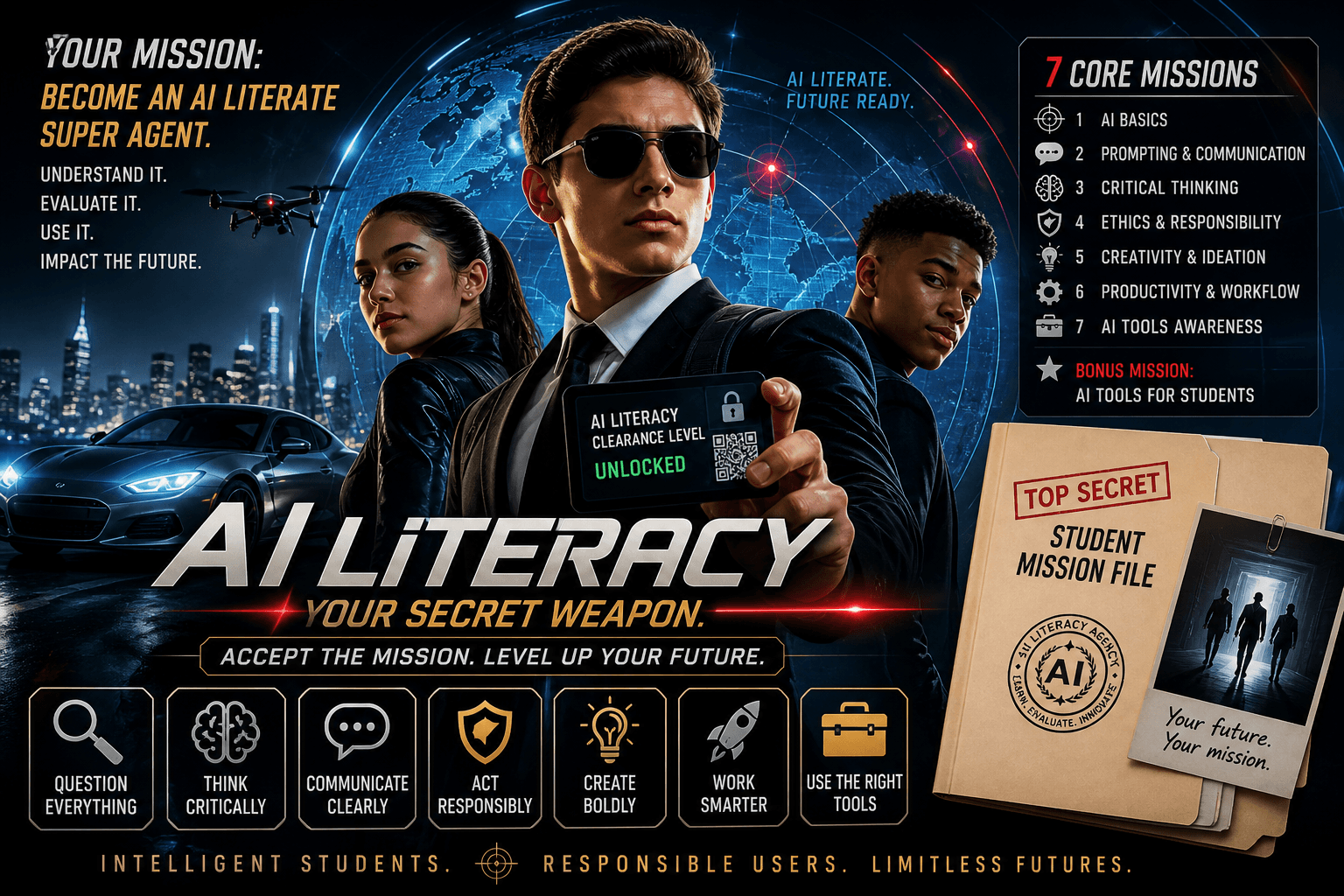
AI is no longer a future skill—it is a present reality. Students are already using AI tools in their coursework, whether we formally teach it or not. The question is no longer if AI should be included in our classes, but how we guide students to use it effectively, ethically, and intelligently.
This is where the AI Literacy for College Students tool comes in. Designed as an interactive, game-like experience, it helps students explore seven essential areas of AI literacy while actively engaging with concepts—not just reading about them.
The best part? You can integrate it into your course in minutes.
What This AI Literacy Tool Covers
The lesson is structured around seven core areas that every college student should understand about AI:
- Understanding AI Basics – What AI is (and isn’t), and how it actually works
- Prompting & Communication – How to ask better questions to get better results
- Critical Thinking – Evaluating AI outputs instead of blindly trusting them
- Ethics & Responsibility – Bias, misinformation, and academic integrity
- Creativity & Ideation – Using AI as a creative partner, not a shortcut
- Productivity & Workflow – Saving time while improving quality
- AI Tools Awareness – Exploring tools students can use across disciplines
Instead of a lecture, students move through the experience interactively—making decisions, reflecting, and learning by doing.
AI Literacy Approach: “Here’s how to use AI to improve your thinking, writing, and problem-solving responsibly.”
This shift transforms AI from a threat into a teaching opportunity.
This type of prompt models exactly what students should be learning—how to guide AI with intention and purpose.
How to Add This to Your Course (2 Easy Options)
You can integrate this AI Literacy lesson instantly—no redesign required.
Option 1: Share the Link
Simply provide students with the lesson link:
https://profgarygraves.github.io/ai-literacy-for-college-students/
Option 2: Embed in Canvas (Recommended)
Add the lesson directly into your module using this embed code:
This creates a seamless, in-course experience for students.
Copy-and-Paste Prompts for Faculty
Best Practices for Using This Tool
- Use it early – Introduce AI expectations at the start of your course
- Pair with reflection – Have students explain how they will use AI
- Reinforce throughout – Refer back to AI literacy in assignments
Common Mistakes to Avoid
One of the biggest mistakes is ignoring AI entirely or only addressing it through policy. Students need guided practice, not just warnings.
Another mistake is assuming students already know how to use AI well. Most students are experimenting—but without structure, their use is often shallow or ineffective.
Try This Now
Add the AI Literacy lesson to one module in your course and pair it with a short reflection activity.
You’ll quickly see the difference in how students approach their work.